


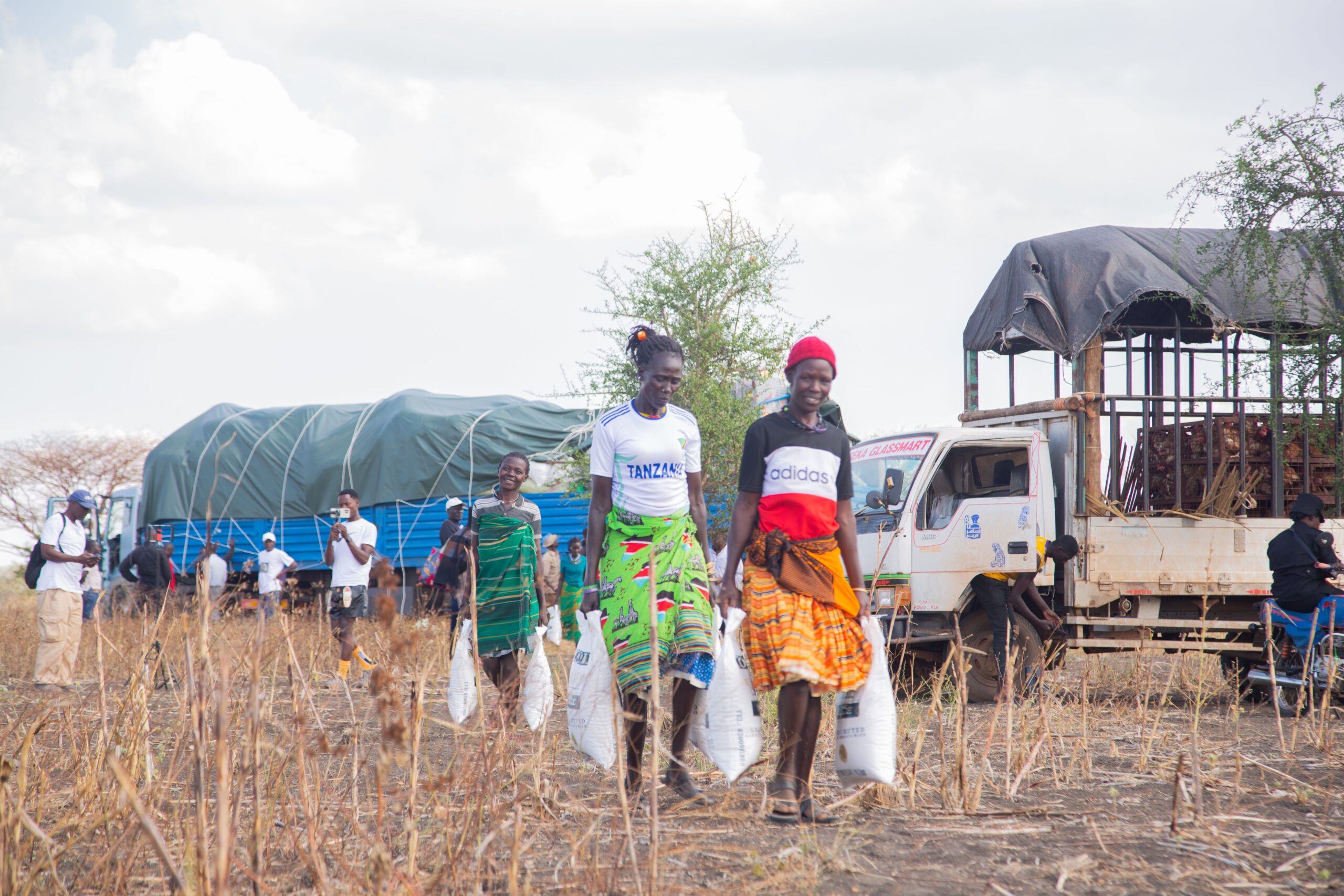
World Food Programme Tanzania: The Ultimate Career Guide
The World Food Programme Tanzania is part of the United Nations organization focused on food issues. Unemployment remains one of the most pressing challenges facing young graduates in Tanzania today. As universities graduate thousands of energetic, ambitious youths into the job market each year, the competition for sustainable, impactful, and rewarding careers has intensified. In this landscape, international humanitarian organizations are top employers. Chief among them is the World Food Programme Tanzania (WFP Tanzania).
For passionate Tanzanian job seekers, South Tanzanian youth, and recent graduates, landing a role with the World Food Programme is more than just securing a monthly salary. It is an unparalleled opportunity to contribute to sustainable development, eradicate hunger, and build resilient food systems within their own communities.
Therefore, this comprehensive guide delivers an in-depth breakdown of everything you need to know about the recruitment process of the World Food Programme Tanzania. From core operational mandates to application strategies, required educational qualifications, and expert tips to make your application stand out. This guide is designed to transform your career aspirations into reality.
The World Food Programme Tanzania Detailed
Before explaining about the details of application processes and recruitment criteria, it is essential to understand what the organization does on the ground. Below is a quick overview of WFP’s presence, operations, and strategic focus areas within the United Republic of Tanzania.
-
Primary Mandate: Saving lives and changing lives by delivering food assistance in emergencies and working with communities to improve nutrition and build resilience.
-
Country Office Location: Dar es Salaam, Tanzania.
-
Sub-Offices and Field Operations: Strategic locations across the country, including Dodoma, Kigoma (supporting refugee camp responses), Kasulu, and targeted project locations across the Southern Highlands and semi-arid regions.
-
Key Focus Areas in Tanzania: Refugee food assistance, climate-smart agriculture, nutrition interventions for women and children, supply chain and logistics development, and smallholder farmer market support.
-
Primary Target Demographics for Empowerment: Rural smallholder farmers, women, vulnerable children, and unemployed Tanzanian youth seeking development careers.
-
Employment Categories: National Professional Officers (NPO), General Service (GS), Consultants, Service Contracts (SC), and Dedicated Internship Programmes.
The Contribution of the WFP Mission in Tanzania
To position yourself as the ideal candidate for the World Food Programme Tanzania, you must first deeply understand the organization’s local mission, strategic goals, and historical context. WFP operations are tightly aligned with Tanzania’s National Five-Year Development Plans and the United Nations Sustainable Development Cooperation Framework (UNSDCF).
The Strategic Shift from Relief to Resilience
Historically, WFP was perceived primarily as an emergency response agency giving food distributions in times of drought or conflict. The emergency response remains a core pillar, particularly in managing refugee populations from neighboring countries in the Kigoma region. Moreover, WFP Tanzania has shifted significantly toward long term resilience building.
For a job seeker, this means the organization is constantly looking for diverse talent. They require professionals who understand sustainable agricultural practices, climate change adaptation, digital financial inclusion, and market-led development. If you are a graduate from an agricultural hub like Mbeya, Iringa, or Songea, your localized understanding of supply chains and smallholder farming structures is highly valuable to WFP’s strategic shift.
Major Operational Pillars in Tanzania
WFP’s operations in Tanzania are built around several interconnected pillars:
-
Refugee Assistance: Providing life-saving food and nutritional support to hundreds of thousands of refugees hosted in camps within northwestern Tanzania. This requires massive logistics, procurement, and field monitoring infrastructure.
-
Smallholder Farmer Support: Connecting small-scale farmers to reliable markets, reducing post-harvest losses, and providing training on climate-smart agronomic practices.
-
Nutrition Programs: Addressing stunting and malnutrition through targeted supplementary feeding programs, focusing on the critical first 1,000 days of a child’s life, and empowering pregnant and lactating women.
-
Supply Chain and Logistics: Utilizing Tanzania’s strategic maritime and road infrastructure (such as the Port of Dar es Salaam and the central corridor) to move food efficiently not only within Tanzania but also to landlocked neighboring countries like the DRC, Rwanda, Burundi, and Zambia.
Fundamental Requirements for the World Food Programme Tanzania
Securing a job with a global agency like WFP requires meeting stringent, non-negotiable compliance and capability standards. The organization looks for well-rounded individuals who possess a blend of formal academic training, practical field readiness, and impeccable ethical standards.
The Level of Education Needed
Academic qualifications are the first screening metric used during the automated shortlisting process. WFP Tanzania segments its roles clearly based on education:
-
General Service (GS) Roles: For administrative, clerical, driving, and basic logistical support roles, a secondary school education supplemented by technical certifications or a specialized diploma is typically required.
-
Service Contract (SC) and National Professional Officer (NPO) Roles: These professional positions require a minimum of a Bachelor’s degree from a recognized university. Popular fields of study include Agricultural Economics, Development Studies, Logistics and Supply Chain Management, Nutrition, Public Health, Business Administration, Information Technology, and Statistics.
-
Advanced Positions: Specialist, managerial, or consultancy roles often require a Master’s degree or an equivalent post-graduate qualification coupled with progressive field experience.
Technical and Soft Skills Required
Academic degrees alone will not secure a role at WFP Tanzania. The agency looks for a robust mix of competencies:
-
Data Literacy and Analytical Capacity: The ability to collect, clean, and interpret field data using tools ranging from basic Excel to advanced statistical software (like SPSS or Stata) or mobile data collection tools (like KoboToolbox).
-
Supply Chain and Logistics Management: Understanding warehouse management, inventory tracking, fleet optimization, and procurement procedures.
-
Fluency in Swahili and English: Impeccable written and spoken English is mandatory as it is the official working language of the United Nations. Simultaneously, native-level fluency in Kiswahili is crucial for field-based roles to communicate effectively with local communities, government authorities, and smallholder farmers.
-
Adaptability and Interpersonal Skills: Working in multi-cultural environments and dealing empathetically with vulnerable, marginalized communities.
The Nationality and Eligibility
The positions with WFP are highly competitive. For all national positions (National Professional Officers, Service Contracts, and General Service positions advertised locally), applicants must be citizens of the United Republic of Tanzania.
During the application process, you will be required to upload valid identification documents, such as a National Identification Authority (NIDA) number or card, a valid Tanzanian passport, or a certified birth certificate. Non-citizens are only eligible to apply for international positions (P-level or International Consultants) listed on the global WFP career portal.
Readiness to Work Anywhere in Tanzania
The WFP’s work happens where the need is greatest, and that is rarely in the comfort of urban boardrooms. Candidates applying to the World Food Programme Tanzania must possess an unconditional willingness and physical readiness to be deployed to remote, rural, and hard-to-reach locations.
Field mobility is an absolute prerequisite for career growth within the organization. It could be monitoring food distributions in the refugee camps of Nyarugusu or Nduta, conducting market assessments in rural villages in Singida, or working with farming cooperatives in the Southern Highlands,
Career Paths and Structural Entry Points for Graduates
Navigating the entry points of an international organization can be confusing for recent graduates. WFP uses a structured classification system for its workforce, and understanding these pathways can help you target positions that align with your current experience level.
[Entry Points for Graduates]
       │
       ├──► Internship Programme (Current students or graduates within 12 months)
       │
       ├──► Service Contracts (SC) (Entry to mid-level project execution roles)
       │
       └──► National Professional Officers (NPO) (Advanced strategic/managerial roles)
The WFP Internship Programme
This is the single most effective entry point for recent university graduates and young professionals under the age of 30. WFP internships are structured learning opportunities that last between two to six months, with possibilities for extension. Unlike many traditional unpaid internships, WFP provides a monthly stipend to cover basic living expenses, making it accessible to youth from diverse economic backgrounds.
-
Eligibility: You must be currently enrolled in a recognized university graduate programme or have graduated within the last 12 months.
-
Value Proposition: It offers hands-on experience, networking opportunities within the UN system, and an insider’s understanding of institutional procurement and field operations.
Service Contracts (SC)
Service contracts are used for personnel hired to execute specific, localized projects. These roles are typically graded from SC1 to SC11.
-
SC3 to SC5: Entry-level positions focusing on operations, data entry, field monitoring assistance, and administrative support. Perfect for graduates with 1–3 years of experience.
-
SC6 to SC8: Mid-level professional roles involving project management, program policy analysis, and logistics supervision.
National Professional Officers (NPO)
These are high-level professional positions reserved for national citizens who possess substantial expertise and leadership capacity. Graded from NO-A (entry-level professional) to NO-D (senior manager), these positions involve strategic planning, high-level government liaison, and fiscal oversight of multimillion-dollar food security portfolios.
The Salary and Benefits
One of the reasons the World Food Programme Tanzania is a highly sought-after employer is its competitive compensation and benefits framework. The UN common system follows a structured pay scale designed to ensure internal equity and market competitiveness.
Salary Ranges and Grading Structure
The exact salary figures fluctuate based on budget approvals, cost-of-living adjustments, and currency variations. The WFP national staff are compensated well above the average domestic market rates in Tanzania. They are paid a decent salary compared to local standards.
-
Entry-Level and General Service (GS/SC3-SC5): Offers a secure income that allows young professionals to build financial stability early in their careers, supplemented by allowances for local field travel.
-
Mid-Level Professional (SC6-SC8 / NO-A): Provides excellent competitive net base salaries, enabling mid-career professionals to access premium housing, healthcare, and financial security.
-
Senior National Officers (NO-B to NO-D): Top-tier compensation packages matching senior executive roles within the banking or telecommunications sectors in Tanzania.
Comprehensive Benefits and Perks
Beyond the base salary, employment with WFP Tanzania comes with a robust array of institutional protections and benefits:
-
Comprehensive Medical Insurance: Premium health insurance coverage extending to the employee, their spouse, and recognized dependent children, giving access to the best medical facilities within and outside Tanzania.
-
United Nations Joint Staff Pension Fund (UNJSPF): A highly secure, globally managed retirement savings plan.
-
Generous Paid Leave: Typically 2.5 days of annual leave accrued per month, alongside parental leave, sick leave, and official UN holidays.
-
Continuous Professional Development: Access to world-class internal training platforms covering leadership, data science, humanitarian logistics, and project management.
The Application Procedure
To obtain a position within the World Food Programme Tanzania, your application must clear a rigorous, multi-stage, merit-based selection process. Randomly emailing your CV or dropping hard copies at the Dar es Salaam office will not work. Follow this proven step-by-step roadmap to ensure your application gets noticed.
The First Step is Navigating the Official WFP Careers Portal
All legitimate vacancies are published on the official WFP Global Careers website.
-
Avoid third-party job boards that demand payment; WFP never charges a fee at any stage of the recruitment process.
-
Filter your search by selecting “Tanzania” under the country location tab.
-
Read the Job Description (JD) thoroughly to identify the specific competencies, education criteria, and experience years required.
The Second Step is Crafting a UN-Compliant CV and Profile
WFP uses automated Applicant Tracking Systems (ATS) to filter out resumes that do not match the job requirements. To beat the ATS filter:
-
Use Keywords from the Job Description: If the vacancy asks for “post-harvest loss mitigation,” “stakeholder coordination,” or “logistics data analysis,” ensure these exact phrases appear naturally in your resume.
-
Adopt the CAR Format: When describing your past experiences, use the Challenge-Action-Result framework. Instead of writing “Responsible for monitoring food security,” write: “Monitored food security indicators across 15 villages in Kigoma, analyzing data from 300 households, which improved food distribution efficiency by 18%.”
The Third Step is Mastering the Competency-Based Interview (CBI)
If your application passes the technical screening and written assessments, you will be invited to a Competency-Based Interview. CBIs operate on the principle that past behavior is the best predictor of future performance.
During the interview, structured panels will ask questions like: “Tell us about a time when you had to resolve a conflict within a team working under a tight deadline.” You must answer these questions using the STAR Method:
-
S – Situation: Set the scene and context.
-
T – Task: Explain the challenge or goal you needed to address.
-
A – Action: Describe the specific steps you took to resolve it.
-
R – Result: Highlight the positive outcome, quantified with data wherever possible.
Expert Tips for Tanzanian Job Seekers and Graduates
Standing out in a pool of thousands of applicants requires strategic positioning. Implement these actionable, insider tips to maximize your competitive edge.
-
Volunteer and Gain Local Field Experience First: If you are a graduate from a rural university or reside in regions like Mbeya, Songea, or Iringa, volunteer with local NGOs, civil society organizations, or agricultural cooperatives. WFP deeply respects candidates who have grassroots experience working directly with Tanzanian farmers and vulnerable rural communities.
-
Build Specialized Technical Expertise: General degrees are abundant. Differentiate yourself by acquiring specialized certifications. Take free or low-cost courses in data analytics (Power BI, Tableau), digital humanitarian logistics, or climate-smart agricultural economics.
-
Perfect Your Digital Footprint on LinkedIn: Connect with professionals currently working at the World Food Programme Tanzania or the wider UN system in East Africa. Engage meaningfully with their content, share insights on food security trends in Tanzania, and position yourself as an informed, proactive young professional.
-
Tailor Every Single Application: Never use a generic CV for multiple vacancies. Customize your professional profile, key skills section, and career achievements to reflect the unique priorities of the specific role you are applying for.
Frequently Asked Questions on World Food Programme Tanzania
Does the World Food Programme Tanzania offer entry-level jobs for fresh graduates?
Yes. WFP provides dedicated entry points for recent graduates, primarily through its highly competitive Internship Programme and entry-level Service Contracts. These roles focus on operational support, field monitoring, and data entry, allowing young professionals to build their skills from the ground up.
Can I apply for WFP Tanzania jobs if I live outside Dar es Salaam?
Absolutely. WFP encourages applications from qualified individuals across all regions of Tanzania. In fact, individuals living in or originating from operational hubs like Kigoma, Dodoma, Arusha, and the Southern Highlands often possess localized geographic and cultural insights. The insights are highly advantageous for field-based implementation roles.
How long does the recruitment process typically take at WFP Tanzania?
The UN recruitment process is thorough and merit-based, which means it can take anywhere from two to six months from the initial application deadline to the final onboarding stage. The process involves automated screening, technical written tests, competency-based panel interviews, reference checks, and medical clearances.
Do I need to pay any agency or application fees to apply for WFP jobs?
No. The World Food Programme never charges a fee at any stage of the recruitment process whether during application, testing, interviewing, or onboarding. Any website, agency, or individual demanding money or favors in exchange for a job placement at WFP is fraudulent and should be reported immediately.
What are the most in-demand language skills for WFP operations in Tanzania?
Flawless command of both written and spoken English and Kiswahili is mandatory. English is the official working language for institutional reporting, strategy design, and donor communications, while Kiswahili is critical for everyday field operations, community engagement, and government liaison across Tanzania.
Are there specific academic institutions WFP prefers in Tanzania?
WFP does not favor any specific university. They accept degrees from all fully accredited and recognized higher education institutions in Tanzania, such as the University of Dar es Salaam (UDSM), Sokoine University of Agriculture (SUA), Mzumbe University, Stella Maris Mtwara University (STeMMUCo) and others. The focus is entirely on your academic performance, relevant field experience, and demonstrated technical competencies.
Conclusion on World Food Programme Tanzania
To conclude on the World Food Programme Tanzania, building a career with the World Food Programme Tanzania is a rewarding path for ambitious Tanzanian youth. The position requires passionate graduates, and dedicated job seekers. While the recruitment standards are undeniably rigorous, they are entirely achievable for candidates who take the time to build the right skills. The candidates who wish to win should structure their applications professionally, and approach the process with persistence.
By aligning your personal career goals with WFP’s mission of achieving zero hunger and fostering sustainable climate resilience. You need to position yourself not just as a job seeker, but as a future leader in global development. You have to stay proactive, monitor the official channels and take the first bold step toward a transformative career dedicated to saving and changing lives across the United Republic of Tanzania.
The Contacts
Office
Dar Es Salaam Plot No. 113, Ada Estates, Burundi Street/Mwindu Lane, Kinondoni. PO Box 77778,
Dar Es Salaam
Tanzania
Phone
YOU MAY ALSO LIKE THIS
- The Financial Services Specialist at Vodacom Tanzania Plc, Dar es Salaam, March 2026
- The Global Communities Recruits Social Research Experts In Tanzania
- WFP Tanzania Hires A Programme Policy Officer In Dar es Salaam
- Discover The Top Fully Funded Scholarships Without IELTS for African Students
YOU MAY ALSO LIKE THIS:
 The Ultimate Guide to the Youth Employment Partnership: Empowering African Graduates with Real Career Opportunities
 The Youth Opportunities Africa: The Ultimate Guide to Internships, Jobs, and Career Growth for African Youth
 The NTA Apprenticeship in Namibia: Complete Guide for Youth, Graduates, and Job Seekers (2026)
 Kickstart Your Tech Career: The Ultimate Guide to an Apprenticeship at Google for African Youth
