


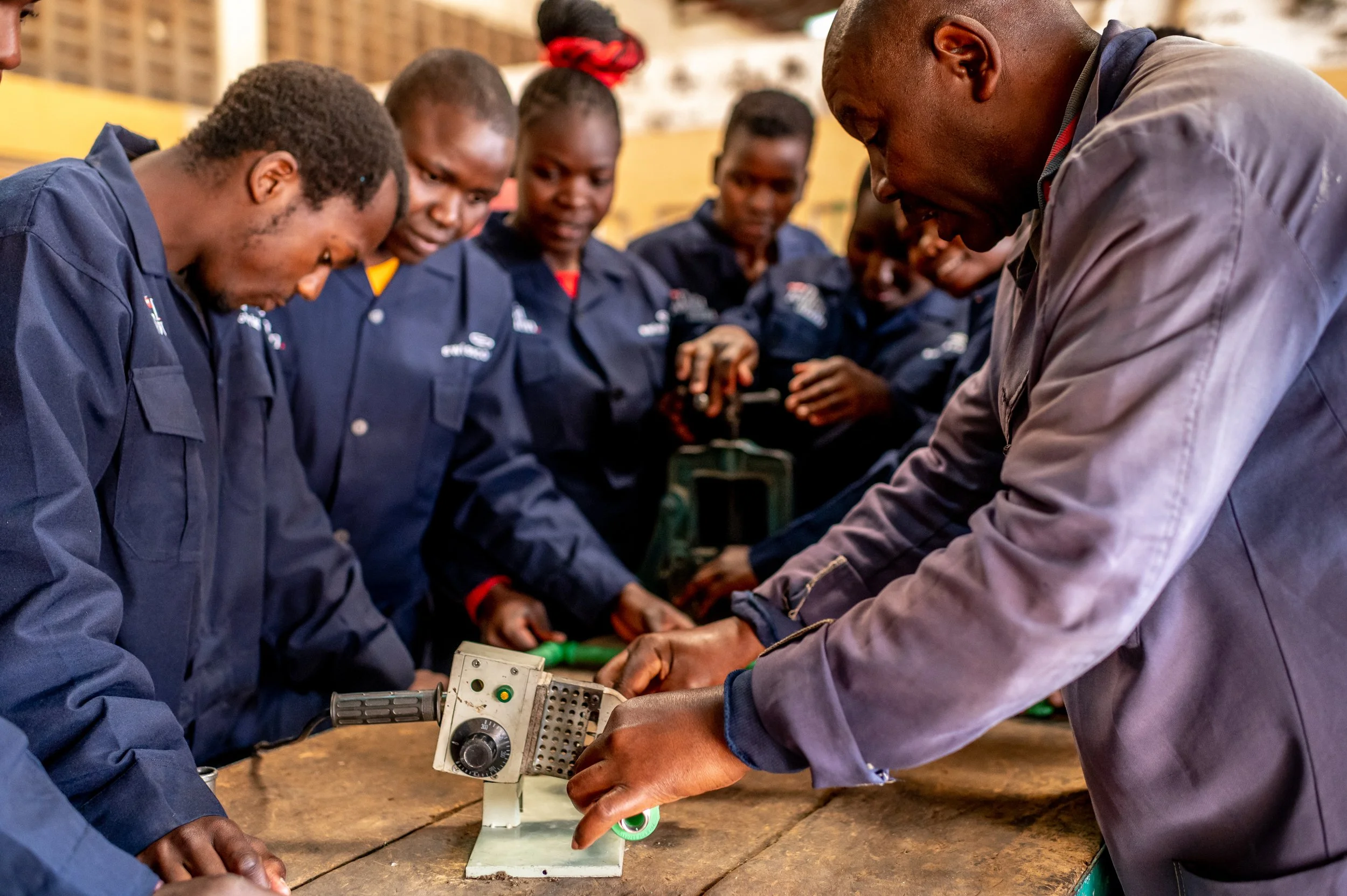

Complete Guide to Kenya TVET Sh105,000 Fees: Why Some Pay Huge Amounts and What’s Really Happening
The Kenya TVET Sh105000 Fees Challenge. Technical and Vocational Education and Training (TVET) in Kenya has long been promoted as the backbone of skills development and youth employment. For years, it was considered an affordable alternative to university education—especially for students with lower KCSE grades.
But recently, a major shift has caused confusion, frustration, and debate across the country: TVET fees rising to as high as Kenya TVET Sh105000 Fees per year. Parents are asking questions. Students are dropping out. Experts are raising concerns. So what exactly is going on? This extensive guide breaks down the truth behind the Kenya TVET Sh105000 Fees, why some students are paying such high amounts, and what the government is doing about it.
The Origin of the KSh 105,000 TVET Fees
The controversy around TVET fees began after the introduction of a new modular training system in 2025.
Under this system, tuition fees in many public TVET institutions increased significantly—from about KSh 56,000 to approximately Kenya TVET Sh105000 Fees per year.
This sharp rise surprised many Kenyans because TVET had traditionally been seen as more affordable than university education. Even more concerning, the KSh 105,000 figure only covered tuition fees, excluding some major and indeed necessary needs:
- Accommodation
- Examination fees
- Training materials
- Tools and equipment
- Daily living expenses
When all of these are added together, the total cost can rise dramatically.
Why Did TVET Fees Increase So Much?
To understand the situation, it’s important to look past the numbers and examine the structural changes in Kenya’s education system.
1. Introduction of Competency-Based Education and Training (CBET)
Kenya shifted from theory-heavy training to Competency-Based Education and Training (CBET).
This model focuses on:
- Practical skills
- Industry readiness
- Hands-on learning
- Continuous assessment
While CBET is beneficial, it is also more expensive to implement. Institutions now require:
- Modern equipment
- Workshops and laboratories
- Industry-standard tools
- More trainers and assessors
All these costs are passed on to students.
2. Modular Learning System
Under the modular system, courses are broken into independent units (modules).
Students pay per module, which can increase total costs over time.
Specialists contend that while this system grants flexibility, it has also:
- Increased administrative costs
- Added assessment expenses
- Led to higher overall fees
3. Reduced Government Capitation
Government funding (capitation) plays a key role in keeping TVET education affordable.
However, recent reports indicate that:
- Many students enrolled after 2023 are not receiving adequate funding.
- Institutions are struggling financially.
- Colleges are forced to shift costs to learners.
This funding gap is one of the biggest reasons behind the fee surge.
4. Rising Cost of Training Materials
Unlike academic programs, TVET courses require physical materials and equipment, such as:
- Welding machines
- Electrical components
- Construction tools
- Catering ingredients
With inflation and global supply challenges, the cost of these materials has increased significantly—pushing up tuition fees.
The Real Cost of TVET Education
While KSh 105,000 is often quoted, the actual cost can be much higher. According to trainers, the total annual cost can reach up to KSh 400,000, including additional expenses. It is necessary to scrutinize all real and actual educational expenses in the country. Some areas that differ across individuals include:
- Tuition fees
- Accommodation
- Meals
- Tools and equipment
- Examination charges
For many families, especially low- and middle-income households, this is simply unaffordable.
Impact on Students and Families
The rise in TVET fees has had serious consequences across Kenya. The rise in tuition primarily affects those with limited resources. TVET education is a great option, as it equips them with real-life skills, but rising tuition fees prevent many from accessing it.
1. Increased Dropout Rates
Many students are unable to complete their courses due to monetary constraints.
Trainers have reported that:
- Enrollment is declining
- Students are dropping out before completion.
2. Reduced Access to Skills Training
TVET institutions are meant to provide accessible education for all, especially students who do not qualify for university.
However, high fees are now:
- Locking out disadvantaged students
- Widening inequality
- Limiting access to technical skills
3. Shift to Private Institutions
Some parents are turning to private colleges in hopes of greater flexibility.
However, this comes with risks:
- Some institutions lack proper accreditation.
- The quality of training may be inconsistent.
Government Response: Fee Reduction to KSh 67,000
In response to broad public outcry, the government stepped in. In March 2026, the Ministry of Education announced a standardized TVET fee of KSh 67,189 per year across public institutions. This was a bold statement and move that the government made to help its citizens.
What This Means
- Fees are now regulated and uniform.
- The amount includes assessment charges.
- The policy aims to increase access and reduce inequality.
This new structure is expected to take effect from May 2026.
How come some Kenyan students continue to pay Ksh 105,000
Despite the new policy and solution to the Kenya TVET Sh105000 Fees challenge, some students may still encounter high fees. When the government regulated the fee structure, it was mainly for public colleges; private institutions can have their own fee structures. Therefore, some students may continue to pay high tuition fees. Here’s why:
1. Transitional Phase
Not all institutions implement policy changes immediately. Some colleges may still be operating under the old fee structure.
2. Additional Costs Not Included
Even with standardized tuition, students still pay for:
- Accommodation
- Meals
- Tools and materials
- Personal expenses
These might significantly increase total costs.
3. Specialized Courses
Programs such as:
- Engineering
- Aviation
- Advanced technical courses
Requires more expensive equipment and training resources, resulting in higher fees.
4. Private Institutions
Private colleges are not always bound by government fee caps.
They may charge:
- Elevated tuition
- Additional administrative fees
TVET: The Best Education Option
Despite fee challenges, TVET in Kenya has gone through rough waters; it remains one of the most practical educational pathways in Kenya. This option empowers a young person with real skills that enable them to manufacture something that did not exist before. TVET is the best way to address youth unemployment, not only in Kenya but across the entire African continent. The solution to the Kenya TVET Sh105000 fees challenge should be taken as a lesson.
Advantages of TVET
- Shorter course duration (6 months to 3 years)
- Hands-on skills training
- High requirement for skilled labor
- Opportunities for self-employment
Kenya’s economy relies heavily on skilled workers in:
- Construction
- Manufacturing
- ICT
- Hospitality
TVET graduates are essential to these sectors.
Financial Support Options for Students
If fees are a concern, there are several ways to reduce the monetary burden:
1. HELB Loans
- The Higher Education Loans Board (HELB) provides loans and bursaries to TVET students.
2. Government Capitation
- Some students still qualify for government subsidies, depending on enrollment year and policy updates.
3. CDF Bursaries
- Local Constituency Development Fund (CDF) programs offer financial assistance.
4. Scholarships
- Some NGOs and private organizations provide scholarships for technical training.
The Call for Change
The TVET fee crisis has highlighted deeper issues in Kenya’s education system. It has revealed the clear gap between the wealthy and the less fortunate. This situation cannot be allowed to continue that way; that is why the government intervened. Moreover, Experts suggest:
- Consistent government funding
- Better implementation of reforms
- Stronger regulation of private institutions
- Increased investment in training infrastructure
Without these changes, TVET risks becoming unaffordable for the very students it is meant to support.
Skills Acquisition with affordable Prices
Kenya is pushing toward a skills-based economy, where technical expertise is highly valued. Kenya’s move is the right decision that most African countries should consider, as it is a sure way to uplift people’s livelihoods across the continent. TVET institutions play a key role in:
- Reducing unemployment
- Supporting industrial growth
- Empowering youth
However, affordability is still a major barrier.
Balancing quality training and accessible education is the key challenge moving forward.
Conclusion on Kenya TVET Sh105000 Fees
To conclude, Kenya TVET Sh105000 Fees, The rise of TVET fees to KSh 105,000 per year triggered a national debate—and for good reason. While the increase was driven by necessary reforms like CBET and improved training standards, it also exposed serious gaps in funding and implementation.
As we conclude, we should congratulate the government for its action. The government’s move to standardize fees at around KSh 67,000 per year is a step in the right direction, but difficulties continue. For students and parents, the key takeaway is this:
- TVET is still a valuable path
- Costs vary by institution and course.
- Financial support options are available.
Most importantly, education is evolving—and in Kenya, skills are becoming just as important as academic degrees.
Official Information Portal
Recommended Posts
- Scholarships for Egyptian High School Students: A Complete Guide to Funding Your Education
- The RTP Scholarship in Australia: A Complete Guide for International Students
- The Ireland Government Scholarship 2026-2027: A Complete Guide for International Students
- The Kenya TVET Fees Review 2026: From Backlash to Promised Relief
- The NCV Programs TVET Colleges South Africa 2026: A Guide to Building a Career in South Africa
