



Mount Kenya University Programmes, Requirements, Fees
Mount Kenya University is one of the academic institutions Kenyan students frequently consider when looking for certificate, diploma, degree and postgraduate programmes. The university offers programmes in health sciences, business, education, law, computing, social sciences, hospitality, journalism and other fields.
Choosing a university, however, should involve more than selecting a familiar name. Students must compare entry requirements, professional accreditation, tuition costs, learning modes and career prospects before applying.
This comprehensive Mount Kenya University guide explains the programmes available, general admission requirements, application process, study options and factors that can affect employability. It is designed to help Kenyan students and parents make informed decisions without relying on outdated course lists or unofficial application agents. Because requirements and fees can change, applicants should confirm their preferred programme using the latest official MKU prospectus before paying any money.
Synopsis of Mount Kenya University
- Official name: Mount Kenya University
- Abbreviation: MKU
- Institution type: Private chartered university
- Main campus: Thika, Kiambu County, Kenya
- Levels offered: Certificate, diploma, bachelor’s, postgraduate diploma, master’s and doctorate
- Learning options: Regular, part-time, institution-based and Open, Distance and Electronic Learning
- Main intakes: January, May and September for several programmes
- Other intake periods: Some distance and institution-based programmes may follow April, August and December intakes
- Application method: Online through the official MKU admission portal
- KUCCPS admission: Available for eligible programmes and placement cycles
- Application fee: Generally KSh 1,000 for certificate, diploma and undergraduate applications, according to the university’s current application guidance
- Regulator: Commission for University Education
- Official website: mku.ac.ke
- Admission portal: admission.mku.ac.ke
Defining Mount Kenya University
Mount Kenya University is a Kenyan private university whose main campus is in Thika. It provides academic and professional training at undergraduate and postgraduate levels.
MKU traces its development to an institution that initially concentrated on health-related training. Its academic portfolio has since expanded into numerous professional and general disciplines.
The university serves school leavers, diploma holders, working professionals and postgraduate students. Depending on the programme, learners may study through regular classes, part-time arrangements or digital learning.
Students should distinguish between the university’s institutional accreditation and the approval of an individual programme. A university may be recognised, but programmes leading to regulated professions can require additional approval from the relevant professional body.
Before applying, you need to check for the current status of both the institution and your intended course through the Commission for University Education and, where applicable, the relevant professional regulator.
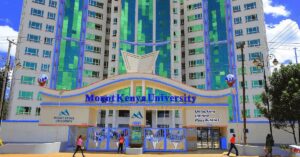
Mount Kenya University Academic Programmes
Mount Kenya University offers programmes through several schools, colleges and departments. Availability may depend on the campus, intake and learning mode. The following overview highlights major subject areas rather than every specialisation in the university catalogue.
Medicine and Health Sciences
Health programmes are among MKU’s most visible academic offerings. The College of Health Sciences covers fields such as:
- Medicine and surgery
- Clinical medicine
- Nursing
- Pharmacy
- Public health
- Medical laboratory sciences
- Health records and information management
- Community health
- Nutrition and dietetics, subject to the current prospectus
Examples include the Bachelor of Medicine and Bachelor of Surgery, Bachelor of Science in Nursing, Bachelor of Pharmacy and Bachelor of Science in Public Health. These courses normally have stricter entry requirements than many arts and business programmes. They may also involve laboratory sessions, clinical placements and approval by professional regulatory bodies.
For example, MKU’s 2026/2027 prospectus lists a KCSE mean grade of C+ for the Bachelor of Medicine and Bachelor of Surgery, together with specified grades in Biology, Chemistry, Physics or Mathematics, and English or Kiswahili.
Students must verify the precise subject combination. Meeting the overall C+ university-entry threshold alone does not necessarily qualify someone for medicine, pharmacy or nursing.
Business and Economics
Mount Kenya University business programmes serve students interested in management, finance, entrepreneurship and organisational leadership.
Examples may include:
- Bachelor of Business Management
- Bachelor of Commerce
- Bachelor of Science in International Business Administration
- Bachelor of Science in Financial Economics
- Diploma in Business Management
- Diploma in Human Resource Management
- Diploma in Project Management
- Certificate in Business Management
- Master of Business Administration
Business-related qualifications can lead to careers in banking, sales, procurement, accounting, human resources, administration and entrepreneurship. A degree title by itself does not guarantee employment. Business students can improve their prospects by gaining digital, analytical, financial and communication skills during their studies.
Computing and Informatics
Students interested in technology can explore programmes in areas such as:
- Information technology
- Computer science
- Information science
- Business information technology
- Software-related disciplines
- Data and information systems
- Cybersecurity-related study, where currently offered
Possible careers include:
- Software developer
- Systems administrator
- ICT support specialist
- Database administrator
- Network technician
- Business systems analyst
- Information security professional
- Data analyst
- Digital entrepreneur
Technology changes quickly. Students should therefore evaluate the course content, laboratory access, professional certifications, industrial attachments and opportunities to build practical projects.
An employable computing graduate should leave university with more than examination results. A portfolio containing functional websites, software applications, data projects or security labs can provide stronger evidence of ability.
Education Programmes
Mount Kenya University offers teacher-training and postgraduate education programmes. Depending on the current catalogue, these may include:
- Bachelor of Education in Arts
- Bachelor of Education in Science
- Bachelor of Education in Early Childhood Studies
- Postgraduate Diploma in Education
- Master of Education
- Doctoral programmes in education
Applicants should select teaching-subject combinations carefully. The combination must satisfy university admission rules and any applicable requirements for registration as a teacher.
Students should also consider demand for their intended subjects. Mathematics, sciences, languages, special-needs education and technology-related teaching skills may offer different opportunities depending on employer needs.
Law
The Bachelor of Laws is designed for students interested in legal practice, policy, governance, compliance and justice-related careers.
The university’s 2026/2027 prospectus lists several possible entry routes for the LLB. These include a KCSE mean grade of C+ with the required language performance, recognised advanced-level qualifications, an earlier degree, or an appropriate accredited diploma.
According to that prospectus, a KCSE applicant needs the prescribed mean grade and a B in English or Kiswahili. Applicants should verify this directly because the requirements of legal education and professional progression may be updated.
Completing an LLB is one stage in the journey towards legal practice. Graduates who want to become advocates in Kenya must satisfy the applicable requirements for professional training and admission to the Bar.
Law graduates can also work in:
- Compliance
- Policy research
- Corporate governance
- Human rights
- Insurance
- Banking
- Public administration
- Alternative dispute resolution
- Legal publishing
Journalism and Mass Communication
MKU programmes in journalism, communication and creative media may cover:
- Journalism
- Digital journalism
- Public relations
- Film production
- Animation
- Gaming
- Broadcasting
- Corporate communication
The university’s prospectus highlights practical media training and career possibilities such as reporting, video editing, photography, animation, film production and public relations.
Students choosing media courses should begin building a portfolio immediately. Published articles, podcasts, photographs, short documentaries and verified social-media projects can be more persuasive to employers than a CV containing only course units.
Social Sciences and Community Development
Social-science programmes may include:
- Development studies
- Psychology
- Community development
- Social work
- International relations
- Peace studies and conflict resolution
- Counselling-related programmes
- Security studies
- Public administration
Graduates may find opportunities in government, civil society, humanitarian organisations, research, community projects and international development. These fields are competitive. Students can improve their employability by learning research methods, monitoring and evaluation, data analysis, project management and proposal writing.
Pure and Applied Sciences
MKU’s science-related programmes include disciplines connected to:
- Laboratory technology
- Environmental science
- Animal health and production
- Biology
- Chemistry
- Mathematics
- Agriculture-related applications
Some programmes prepare students for regulated or technically specialised work. Applicants must confirm whether the programme meets the requirements of the relevant professional body. Science students should also investigate the availability of laboratories, fieldwork, attachments and research supervision.
Engineering, Energy and the Built Environment
Depending on the current admission cycle, MKU programmes in this area may include courses connected to:
- Electrical and electronic engineering
- Energy and environmental technology
- Petroleum exploration and production
- Construction and built-environment disciplines
Engineering and technology programmes normally require specific KCSE grades in Mathematics and science subjects. Do not select an engineering programme merely because you meet the general university-entry grade. Confirm its current accreditation, subject requirements, study location and professional recognition.
Hospitality, Travel and Tourism
Hospitality and tourism programmes can prepare students for work in:
- Hotels and resorts
- Food and beverage operations
- Events
- Travel agencies
- Tour companies
- Conference facilities
- Destination marketing
- Hospitality entrepreneurship
Practical training, customer service, foreign-language ability and digital booking skills can significantly improve employment prospects in this sector.
Mount Kenya University Entry Qualifications
There is no single entry requirement covering every MKU programme. Admission depends on the qualification level, subject area and professional rules.
The table below provides a general guide.
| Study level | Typical academic starting point | Important note |
|---|---|---|
| Certificate | Often KCSE D+ or another stated qualification | Some technical programmes require specific subjects |
| Diploma | Often KCSE C−, or a relevant certificate | Requirements vary by discipline |
| Bachelor’s degree | Generally KCSE C+ or equivalent | Individual courses may demand higher cluster-subject grades |
| Postgraduate diploma | Relevant recognised bachelor’s degree | Professional experience may sometimes be considered |
| Master’s degree | Relevant bachelor’s degree from a recognised institution | Degree classification and experience requirements vary |
| Doctorate | Relevant master’s degree | A research proposal and other departmental conditions may apply |
These are general patterns, not guaranteed admission criteria.
A Bachelor of Laws applicant, for instance, faces language requirements that differ from those of a business applicant. Medicine, nursing, pharmacy, engineering and science programmes have their own subject combinations.
Alternative Entry Routes
Students who do not qualify for direct degree admission may have other routes, depending on the programme:
- Begin with a relevant certificate and progress to a diploma
- Complete a diploma before applying for a related degree
- Use recognised advanced-level qualifications
- Apply using an appropriate professional qualification
- Seek credit transfer or exemptions, where permitted
- Apply as a mature or international student under the applicable rules
Progression is not automatic. The lower-level qualification must be recognised and relevant to the degree, and the applicant must meet the university’s current admission regulations.
Examples of Programmes, Requirements and Careers
The following examples demonstrate why students must examine both entry requirements and employment outcomes.
| Programme area | Indicative entry consideration | Possible career directions |
|---|---|---|
| Medicine and surgery | C+ mean grade plus demanding science and language subject grades | Doctor, clinical researcher, medical academic |
| Public health | C+ and prescribed grades in science, mathematics and language subjects | Public-health officer, programme coordinator, health researcher |
| Law | C+ plus required English or Kiswahili grade, or another approved route | Advocate after further professional training, compliance officer, legal researcher |
| Information technology | Requirement depends on qualification level | Developer, systems administrator, ICT support officer |
| Business management | C+ for a degree or lower prescribed grade for diploma/certificate pathways | Manager, entrepreneur, sales officer, HR officer |
| Development studies | Commonly C+ for direct degree entry or relevant diploma route | Development officer, project coordinator, researcher |
| Journalism and communication | C+ for applicable degrees, with programme-specific conditions | Reporter, editor, PR officer, producer |
| Education | C+ and appropriate teaching-subject grades | Teacher, trainer, education administrator |
The latest MKU academic programme catalogue should be used to confirm the exact requirement for each course.
Mount Kenya University Fees
Tuition fees vary considerably by programme.
Medicine and other resource-intensive health courses generally cost more than programmes delivered mainly through lectures or digital learning. Fees can also differ between full-time, part-time and online study.
The official 2026/2027 prospectus, for example, lists programme-specific charges by semester or trimester. These figures should not be treated as permanent because the university may revise its fee structure.
In addition to tuition, budget for:
- Application fee
- Registration and statutory charges
- Examinations
- Laboratory or clinical expenses
- Accommodation
- Meals
- Books and digital devices
- Internet access
- Transport
- Fieldwork or attachment
- Graduation charges
MKU’s official application procedure currently indicates the following application fees:
- KSh 1,000: Certificate, diploma and undergraduate programmes
- KSh 2,000: Postgraduate programmes for East African applicants
- USD 50: Non-East African applicants
These are application charges, not tuition fees.
Request a complete fee structure for your exact programme, campus and learning mode. Do not calculate the entire cost using tuition alone.
How to Apply to Mount Kenya University
MKU states that applications are submitted online. The university transitioned to a paperless application process, so prospective students should use its official portal rather than sending documents to unverified individuals.
The First Step is to Choose a Programme
Download the latest prospectus and shortlist courses for which you meet both the overall grade and subject requirements. Compare the curriculum, learning mode, professional recognition and career possibilities.
The Second Step is to Confirm Accreditation
Check that the programme appears among the university’s current accredited offerings. For a regulated profession, check the appropriate professional body as well as the Commission for University Education.
The Third Step is to Prepare Your Documents
Applicants commonly need:
- National ID or passport
- KCSE result slip or certificate
- Academic certificates
- Academic transcripts, where applicable
- Professional certificates, if relevant
- Recent contact information
- Passport photograph, if requested
International applicants may need qualification recognition, immigration and student-pass documents.
The Fourth Step is to Create an Online Account
Visit the official MKU admission portal. Create an account using an active email address and telephone number. Use contact details that you can access because important updates may be sent through them.
The Fifth Step is to Complete the Application
Enter personal and academic information exactly as it appears on your official documents.
Select the correct:
- Programme
- Study level
- Campus
- Learning mode
- Intake
A wrong selection can delay processing or result in an offer that does not match your plans.
The Sixth Step is to Upload the Required Documents
Scan or photograph documents clearly.
Ensure that:
- All four corners are visible
- Names and grades are readable
- Files use the permitted format
- The documents have not been altered
The Seventh Step is to Pay the Application Fee
Use only an official payment channel published by Mount Kenya University.
MKU’s payment page currently lists M-Pesa PayBill 4075677, with the applicant’s national ID or passport number used for the application-fee account reference. Verify the details on the official payment-options page before paying, as payment instructions can change.
The Eight Step is to Submit and Track the Application
Review the form before submitting it.
Save:
- The application reference
- Payment confirmation
- Portal login details
- A copy or screenshot of the submitted form
Monitor the portal and your email for feedback. An application is not an admission offer until the university formally confirms it.
Applying Through KUCCPS
Eligible students may also be placed at Mount Kenya University through the Kenya Universities and Colleges Central Placement Service.
The basic process is to:
- Visit the official KUCCPS portal during an active application or revision period.
- Review the current MKU courses and programme codes.
- Confirm that you meet the minimum and cluster requirements.
- Arrange your choices in genuine order of preference.
- Pay the official KUCCPS processing fee where required.
- Submit and wait for placement results.
- Follow MKU reporting instructions after placement.
Programme codes can change between placement cycles. Always copy them from the live KUCCPS system rather than an old article or prospectus.
KUCCPS placement and direct MKU admission are separate routes. The financial arrangements and documentation may not be identical, so placed students should read their admission letter carefully.
Learning Modes at MKU
Mount Kenya University provides different study arrangements, although not every programme is available under every mode.
Regular Learning
Regular study normally involves scheduled face-to-face classes and is suitable for students who can attend campus consistently. It may be preferable for programmes requiring substantial laboratory, studio or clinical work.
Part-Time Learning
Part-time arrangements can help employed students balance education with work and family responsibilities. Before enrolling, confirm the actual timetable. “Part-time” does not always mean that every class is held in the evening or at weekends.
Open, Distance and Electronic Learning
Digital learning can benefit students who live far from a campus or require greater flexibility.
A successful online learner needs:
- Reliable internet access
- A laptop or suitable device
- Time-management skills
- Confidence using digital platforms
- Personal discipline
- A backup plan for power or connectivity problems
Students should ask whether examinations, practical sessions or orientations require physical attendance.
Academic Programmes and Employability
No responsible university guide should promise that a particular degree will automatically lead to employment. Employability depends on the quality of the programme, market demand, practical experience, professional registration and the student’s own capabilities.
Health Sciences
Health graduates may enter hospitals, clinics, laboratories, public-health programmes, pharmaceutical organisations or research institutions. Professional registration and supervised practice can be compulsory before independent employment.
Business and Economics
Business graduates work across almost every industry, but the market is crowded.
Useful additions include:
- Accounting software
- Advanced spreadsheets
- Data visualisation
- Digital marketing
- Financial analysis
- Sales experience
- Entrepreneurship
Computing
Technology offers local and remote opportunities, but employers usually want demonstrable ability. Students should build projects, contribute to real assignments and pursue credible professional certifications where helpful.
Education
Teacher employability depends on subject combination, registration requirements, vacancies and willingness to work in different locations. Digital teaching, special-needs education and strong communication skills can broaden opportunities.
Social Sciences
Students should combine theory with practical research and programme-management skills. Experience with statistical packages, monitoring and evaluation, report writing and field research can improve competitiveness.
Media and Communication
Media students require a visible body of work. A portfolio, ethical reporting record and ability to produce content across text, audio and video can open more doors than academic results alone.
Skills Students Should Develop at Mount Kenya University
Regardless of the programme, students should develop transferable skills valued in Kenya and internationally.
These include:
- Clear written communication
- Professional speaking and presentation
- Digital literacy
- Research and information evaluation
- Data interpretation
- Teamwork
- Problem-solving
- Ethical judgement
- Time management
- Entrepreneurship
- Networking
- Adaptability
Use attachments, volunteering, student organisations and class projects to practise these abilities. A certificate shows what you studied. A portfolio and professional references help show what you can actually do.
Expert Tips for Choosing an MKU Programme
Start With the Career, Not the Course Name
Identify several roles you might enjoy and investigate their qualifications, working conditions and career progression. A fashionable course can still be a poor choice if it does not match your strengths or goals.
Check Every Subject Requirement
Do not focus only on your KCSE mean grade. A student with C+ overall may still be ineligible for a programme requiring higher grades in Mathematics, English, Kiswahili or the sciences.
Confirm Professional Recognition
This is especially important for:
- Medicine
- Nursing
- Pharmacy
- Clinical medicine
- Law
- Engineering
- Teacher education
- Animal health
Check the professional regulator directly instead of relying only on advertisements.
Compare the Full Cost
Calculate tuition, statutory fees, accommodation, meals, transport and learning materials. A lower tuition figure can still produce a higher total cost if the campus is far from home.
Examine the Curriculum
Compare course units with current job advertisements. If employers repeatedly request tools or abilities that are missing from the curriculum, plan to learn them independently.
Ask About Practical Training
Find out whether the programme includes:
- Industrial attachment
- Clinical placement
- Laboratory work
- Fieldwork
- Teaching practice
- Portfolio development
- Entrepreneurship projects
Practical exposure can make the transition into employment easier.
Speak to Current Students and Graduates
Ask specific questions about teaching consistency, practical facilities, timetables, attachment support and administrative services. One opinion is not enough. Speak to several people and compare their experiences.
Common Mistakes to Avoid
Applying Through an Unverified Agent
Fraudsters can imitate university officers and social-media pages. Apply through official MKU systems and confirm payment instructions on the university website.
Selecting a Programme Based Only on Popularity
Medicine, law, business and IT may be popular, but they demand different interests and abilities. Choose a course that connects your strengths to a realistic career path.
Ignoring Cluster and Subject Grades
The overall KCSE grade is only one part of admission. Programme-specific requirements can determine whether you receive an offer.
Failing to Check Accreditation
Professional recognition should be verified before enrolment, not after graduation. Check both CUE information and the relevant professional authority.
Budgeting Only for Tuition
Accommodation, meals, transport, internet, equipment and fieldwork can significantly increase the cost. Prepare a complete semester or trimester budget.
Assuming Online Study Is Easy
Digital learning offers flexibility, but it requires discipline. Students who postpone lectures and assignments can quickly fall behind.
Waiting Until Graduation to Seek Experience
Start building practical experience early through attachments, volunteering, freelance work, research and student activities.
Frequently Asked Questions About Mount Kenya University
Is Mount Kenya University a private or public university?
Mount Kenya University is a private chartered university in Kenya. Students may apply directly to the university, while eligible applicants may also access relevant placement opportunities through KUCCPS.
What grades are required to join Mount Kenya University?
Requirements depend on the qualification and programme. Degree courses commonly begin at KCSE C+, diploma programmes often at C− and certificate programmes frequently at D+, but individual courses may require higher grades in specific subjects.
Always consult the current prospectus because these general thresholds do not apply uniformly.
Does Mount Kenya University accept KUCCPS students?
Yes. Mount Kenya University receives students placed through KUCCPS in eligible programmes and placement cycles. Applicants should confirm the available courses, programme codes and requirements on the official KUCCPS portal.
How do I apply to Mount Kenya University online?
Visit admission.mku.ac.ke, create an account, complete the form, upload the required academic documents, pay through an authorised channel and submit the application. Keep your reference number and payment confirmation.
Does Mount Kenya University offer online courses?
MKU offers Open, Distance and Electronic Learning for a selection of programmes. Availability varies, and some courses or assessments may still require physical attendance. Confirm the delivery and examination arrangements before enrolling.
How much is the Mount Kenya University application fee?
The university’s current application guidance lists KSh 1,000 for certificate, diploma and undergraduate programmes and KSh 2,000 for postgraduate applications from East African applicants. Non-East African applicants are listed at USD 50.
Verify the amount before payment because charges can be revised.
Which courses are offered at Mount Kenya University?
MKU offers programmes in medicine, nursing, pharmacy, public health, law, education, business, computing, social sciences, journalism, science, hospitality and other disciplines. The exact list depends on the intake, campus, qualification level and learning mode.
Conclusion on Mount Kenya University
Mount Kenya University offers Kenyan students multiple entry pathways and a broad selection of academic programmes. Its certificate, diploma, undergraduate and postgraduate options make it relevant to recent KCSE candidates as well as working professionals seeking further education.
The best programme is not necessarily the most popular one. It should match your grades, interests, budget and long-term career plans.
Before submitting an application, confirm the exact entry requirements, current fees, campus, learning mode and professional accreditation. Use the official Mount Kenya University admission portal and avoid paying agents or unofficial accounts.
Finally, approach university as a period for building capability rather than collecting a qualification alone. Combine your MKU programme with practical experience, digital skills, professional networks and a portfolio that demonstrates what you can contribute in Kenya or beyond.
YOU MAY ALSO LIKE THIS:
 University Intake Periods Kenya 2026 Online Application Portal Guide For The University of Nairobi
 The Egerton University Student Portal: Login, Programmes, Admission Requirements & Student Guide
 KCA University: Courses, Entry Requirements, Admissions and Career Opportunities in Kenya
 Complete Guide for Parents and Students On TVET Courses and Fees In Kenya
